
How to Help Your Pet Feel Comfortable During a Hotel Stay
Preparing a pet for boarding can reduce stress and support a smoother transition. Gradual introductions, familiar comfort items, consistent routines, and accurate health and care information help caregivers provide appropriate support.
Owners should choose a clean, secure facility with clear communication and emergency procedures. Calm departures and time to readjust after returning home can also help, while persistent changes in appetite or behavior may require veterinary attention.
Leaving a beloved pet at a boarding facility can be stressful for both pets and their owners. Dogs and cats may feel uncertain when they enter an unfamiliar environment, meet new caregivers, or spend time away from their families.
The good news is that a little preparation can help make the experience more comfortable. By understanding your pet’s needs and choosing a suitable boarding facility, you can help create a smoother transition.
1. Introduce Your Pet to New Experiences Gradually
If possible, help your pet become familiar with new environments before a longer stay. Short visits to a boarding facility, when offered, can allow your pet to explore new sights, sounds, and smells.
For pets that are especially nervous, ask the facility whether it offers introductory visits or shorter trial stays. Follow your veterinarian’s advice if your pet has severe anxiety or a medical condition that affects travel or boarding.
2. Bring Familiar Comfort Items
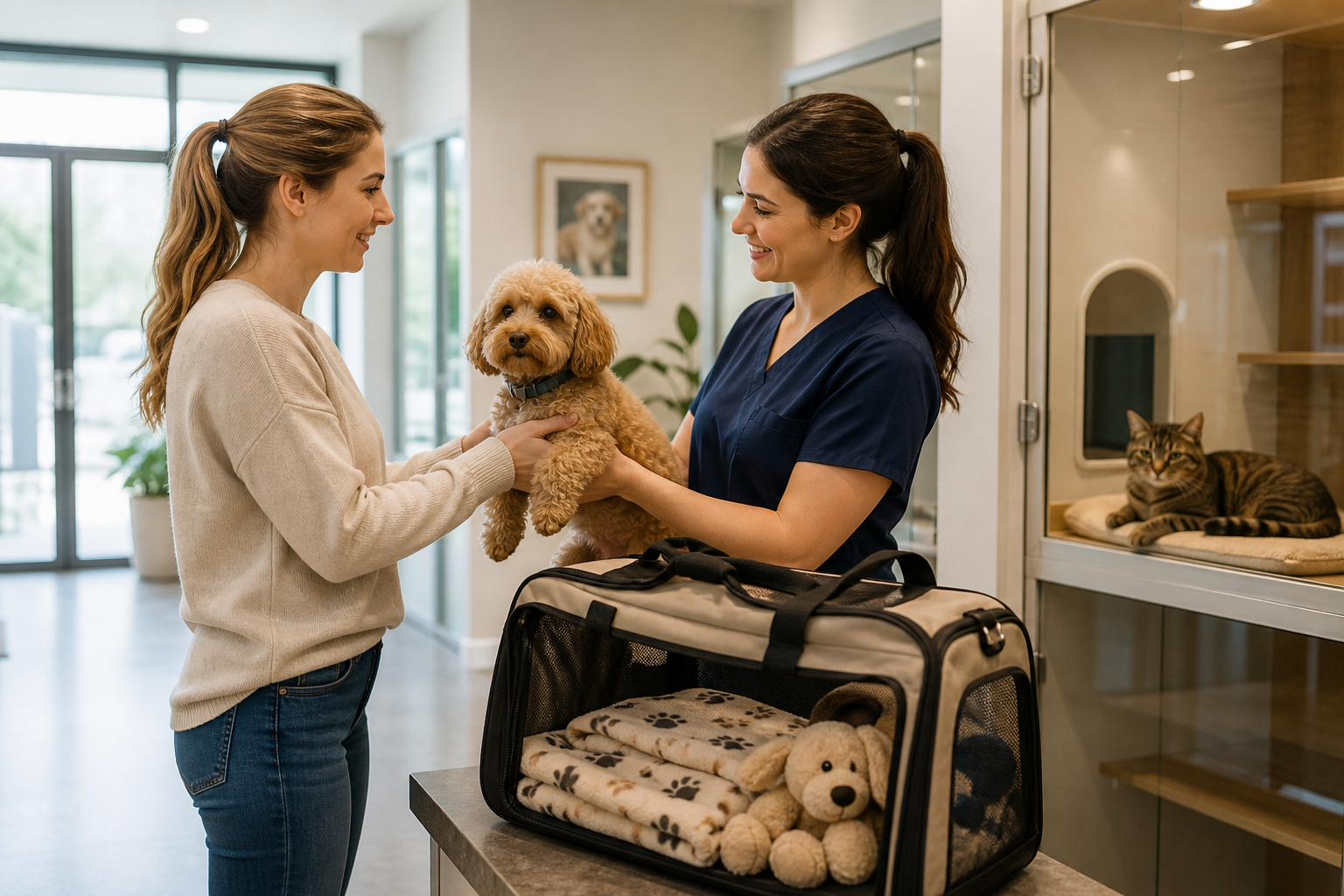
A familiar blanket, a favorite toy, or another safe item from home may help your pet feel more secure. Familiar smells can provide comfort in an unfamiliar setting.
Before packing anything, check the facility’s rules. Some facilities may restrict particular toys, bedding, or items that could be swallowed or damaged. Choose items that are safe for your pet and suitable for the boarding environment.
3. Share Your Pet’s Normal Routine
Pets often feel more settled when their usual routines are maintained. Tell the boarding team about your pet’s feeding schedule, preferred activities, sleeping habits, and bathroom routine.
If your pet has a particular way of responding to commands or enjoys specific types of play, share those details as well. Clear instructions help caregivers understand what is normal for your pet and make daily care more consistent.
4. Provide Accurate Health and Care InformationBefore the stay, provide the facility with relevant vaccination records, medication instructions, emergency contacts, and your veterinarian’s contact details.
Tell the staff about allergies, dietary restrictions, mobility issues, or behavior that may require special attention. Medication should only be administered according to clear instructions and the facility’s policies.
If your pet has recently been unwell or shows significant anxiety, consult your veterinarian before boarding.
5. Choose a Facility That Communicates Clearly
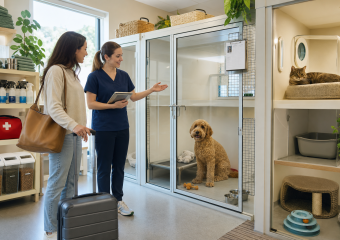
A suitable pet hotel should be able to explain its daily routines, supervision arrangements, emergency procedures, and communication policies.
Ask how staff handle nervous animals, whether dogs and cats have separate areas where appropriate, and how they respond if a pet refuses food or shows signs of distress.
Look for transparent policies, appropriate cleanliness, secure spaces, and staff who answer your questions clearly. Reviews can be useful, but they should be considered alongside your own assessment of the facility.
6. Keep Goodbyes Calm and Simple
Pets can respond to their owners’ emotions and behavior. A calm, reassuring departure may help avoid making the transition more stressful.
Follow the facility’s drop-off guidance and avoid prolonging the goodbye unnecessarily. Every pet is different, so allow the caregivers to follow an approach suited to your animal’s temperament.
After returning home, give your pet time to rest and settle back into familiar routines. Contact a veterinarian if you notice persistent appetite changes, unusual behavior, or other concerning symptoms.
Make Boarding a Better Experience
A positive boarding experience starts before check-in.
Familiar items, clear care instructions, thoughtful preparation, and open communication with caregivers can help reduce uncertainty for pets and their owners.
When comparing facilities, choose one that understands your pet’s individual needs rather than relying on a one-size-fits-all approach.
Pet owners can explore options and learn more about pet accommodation at “PetHotels.io” (https://pethotels.io/).
The goal is simple: help your pet receive appropriate care and feel as comfortable as possible while you are away.